


Queen Elizabeth National Park
Diverse landscapes and one of the most species-rich regions of Uganda
Queen Elizabeth National Park is one of the most well-known and oldest nature reserves of Uganda. Founded in 1952, it is located in the western part of the country and covers an impressive area of around 2,000 square kilometers. With its exceptional biodiversity and spectacular landscapes, the park is regarded as one of the premier destinations for nature and wildlife lovers.

Best travel time
Queen Elizabeth National Park at a glance
| Category | Info |
|---|---|
| Location | Western Uganda, between Lake Edward and Lake George |
| Size | approx. 2,000 km² |
| Founded | 1952 |
| Highlights | Kazinga Channel, Kyambura Gorge, tree-climbing lions |
| Animal species | over 95 mammals, around 600 bird species |
| Best time to visit | June to August, December to February |
| Activities | Game drives, boat trips, chimpanzee trekking |
| Ideal for | safari enthusiasts, primate fans, nature lovers |
Geographical location and history
The park borders Lake Edward and the Virunga National Park in the Democratic Republic of Congo to the west and is separated by the Ishasha River. To the north rises the impressive Rwenzori Mountains, whose peaks reach up to 5,110 meters. The park's landscape is as diverse as its wildlife: from savannas and tropical rainforests to volcanic landscapes and wetlands.
The history of Queen Elizabeth National Park dates back to the 1920s when the area around the Kazinga Channel was first declared a wildlife reserve. In 1952, the Kazinga National Park was established, which was renamed Queen Elizabeth National Park two years later in honor of Queen Elizabeth II's visit. After difficult times with poaching in the 1970s and 1980s, the animal population has been able to recover somewhat thanks to intensive conservation measures since the 1990s.
Overview of ecosystems
The diversity of ecosystems makes Queen Elizabeth National Park a true paradise for animal and nature observation. The savannas and pasturelands are home to large mammals such as elephants, buffaloes, and warthogs. In the Ishasha region, the famous tree-climbing lions provide a special highlight. The wetlands and lakes, including the Kazinga Channel, attract hippos, fish eagles, and a variety of other bird species. Papyrus swamps and the saline crater lakes in the northern part of the park attract flamingos and migratory birds from Europe.
The forests, such as the Maramagambo Forest in the east, also provide habitat for chimpanzees and other primates. These ecosystems allow the park to host more than 95 species of mammals and about 600 species of birds, making it one of the most species-rich conservation areas in the world.
The combination of breathtaking landscapes and impressive biodiversity has secured Queen Elizabeth National Park a place among Africa's most significant national parks.
Fascinating wildlife of Queen Elizabeth National Park
Queen Elizabeth National Park is a true paradise for wildlife observation and home to an impressive variety of wildlife. From majestic elephants to rare tree-climbing lions, the park offers unique experiences for safari lovers. Thanks to the varied landscapes - from savannas to tropical rainforests - countless animal species find ideal living conditions here.
Wildlife at a glance
| Animal species | Region | Special feature |
|---|---|---|
| Lions | Ishasha | tree-climbing |
| Elephants | Savannas & forests | approx. 2,500–3,000 animals |
| Hippos | Kazinga Channel | around 5,000 animals |
| Leopards | forested areas | very shy |
| Buffalo | open plains / at Kazinga Channel | large herds |
| Chimpanzees | Kyambura Gorge | habituated group |
Large mammals and predators
The park is known for its impressive large mammals. Elephants roam the savannas and forests of the park in impressive numbers of about 2,500 to 3,000 animals. Also frequently encountered are African buffalo, which especially gather near water sources and open grasslands. Hippos, numbering around 5,000, are a ubiquitous presence in the waters, particularly in the Kazinga Channel.
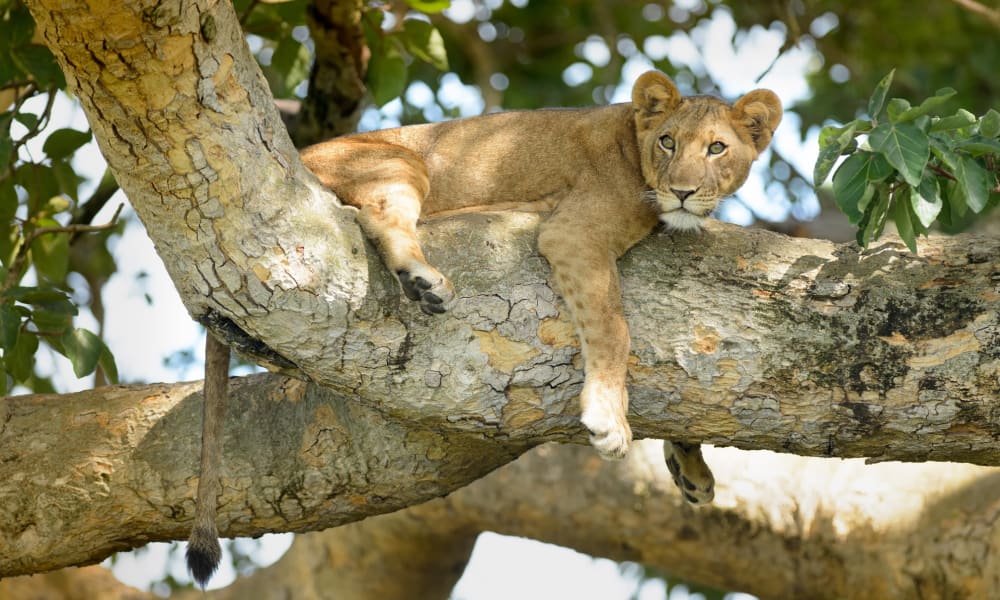
A special highlight is the tree-climbing lions in the Ishasha sector, whose unique behavior can only be observed in a few places worldwide. The lions use the branches of large fig trees as resting spots, providing visitors with unforgettable photo opportunities. However, even though some tree-climbing lions can still be seen occasionally, their numbers have drastically reduced. Leopards, known for their shy and reclusive behavior, can also be discovered with a bit of luck in the park's dense forests.
The world of primates in the Kyambura Gorge
The Kyambura Gorge in the eastern part of the park is a hotspot for primate observations. It is home to a small, habituated group of chimpanzees that forms the heart of the chimpanzee trekking experience. Visitors can experience these fascinating animals up close on guided tours while exploring the lush forests of the gorge. Besides chimpanzees, the region is also home to a variety of other primate species, including red-tailed monkeys, baboons, and colobus monkeys.
The trekking tours in the Kyambura Gorge last about two to three hours and not only offer the opportunity to observe the chimpanzees but also to discover the lush flora of the region. Especially in the dry season, when the paths are well accessible, these tours promise an unforgettable adventure in the midst of nature.
Unique Landscapes and Attractions
Queen Elizabeth National Park is celebrated for its breathtaking landscapes, offering visitors a diverse array of scenic wonders. Two of its standout features are the Kazinga Channel and Kyambura Gorge, which captivate with their ecological significance and unforgettable experiences.
The Wildlife of the Kazinga Channel
The Kazinga Channel, a natural waterway connecting Lake Edward and Lake George, stretches 20 miles across the park. This aquatic haven is a hotspot for wildlife viewing and boasts one of the world’s largest populations of hippos, numbering around 5,000. Along its banks, visitors can spot Nile crocodiles basking in the sun, while pied kingfishers, pelicans, and African fish eagles soar overhead.
Boat safaris along the Kazinga Channel offer an extraordinary perspective of the park’s wildlife. These cruises, especially in the late afternoon when animals gather at the water’s edge, provide an intimate look at the region’s biodiversity. The Mweya Peninsula is a popular departure point for these tours, offering panoramic views of the channel and its surroundings. Whether aboard a group vessel or a private boat, the serene ambiance of the channel makes this experience unforgettable.
The Mysterious Kyambura Gorge
Known as the “Valley of the Apes,” Kyambura Gorge is one of the park’s most striking landscapes. This 10-mile-long canyon, carved by tectonic forces, plunges up to 330 feet deep and is blanketed in tropical rainforest. The Kyambura River snakes through the gorge, creating a lush habitat for an isolated chimpanzee population.
Beyond its chimps, the gorge shelters other primates like black-and-white colobus monkeys and L’Hoest’s monkeys, as well as over 300 bird species. Trekking through Kyambura Gorge offers a challenging but rewarding journey into a hidden world of vibrant biodiversity and tranquil beauty.
Together, the Kazinga Channel and Kyambura Gorge showcase the natural wonders that make Queen Elizabeth National Park a premier destination for safaris and ecological exploration.
Practical Travel Tips
A trip to Queen Elizabeth National Park is a once-in-a-lifetime experience, and proper preparation can make it seamless and unforgettable. Here’s everything you need to know about when to visit, where to stay, and how to stay safe.
Best Times to Visit
The ideal time to visit depends on your interests. For wildlife enthusiasts, the dry seasons from December to February and June to August are perfect. During these months, vegetation is sparse, and animals congregate near water sources, making them easier to spot. Temperatures remain comfortable, averaging between 77°F and 86°F.
The rainy seasons, from March to May and October to November, transform the park into a verdant paradise and are excellent for birdwatching. However, heavy rains can make some areas less accessible. Early morning and late afternoon are generally the best times for wildlife viewing, as animals are most active during these cooler hours.
Accommodations, and Visitor Facilities
Entrance fees to the park are affordable compared to other East African destinations.
Accommodations range from luxury lodges to budget-friendly options, ensuring something for every traveler:
Luxury: Mweya Safari Lodge offers air-conditioned suites with panoramic views.
Mid-range: Queen Elizabeth Bush Lodge features rustic yet spacious bandas.
Budget: Enjojo Lodge caters to travelers seeking affordability without compromising comfort.
Family-friendly: Queen’s Cottage and other family lodgings provide ample space for groups.
Most lodges come equipped with restaurants, bars, and swimming pools, ensuring a comfortable stay. Popular activities include boat cruises on the Kazinga Channel, game drives, and guided birdwatching tours.
Safety Guidelines
Safety is paramount in Queen Elizabeth National Park. Visitors should always follow park ranger instructions, maintain a respectful distance from wildlife, and never feed the animals. For health precautions, pack mosquito repellents, take antimalarial medication, and avoid drinking untreated water.
Personal belongings should be secured, and walking alone after dark is not recommended. To protect the environment, leave no waste behind, stay on designated trails, and light fires only in approved areas.
With these tips in mind, your visit to Queen Elizabeth National Park will be safe, enjoyable, and truly memorable.
Cultural Experiences and Surroundings
Beyond its natural splendor, Queen Elizabeth National Park and the surrounding Kasese region offer rich cultural experiences that invite travelers to connect with local traditions and communities.
Kasese: Gateway to the Park
The town of Kasese serves as the entry point to Queen Elizabeth National Park. Nestled at the foot of the Rwenzori Mountains, this bustling hub provides a range of tourist amenities, from accommodations to transportation options. Kasese also serves as a cultural crossroads, home to diverse ethnic groups such as the Basongora, Bagabo, and Banyabindi, each preserving unique traditions and lifestyles.
Local Culture and Community Projects
Travelers interested in cultural immersion will find numerous opportunities to engage with local communities. Projects like the Iby’iwacu Cultural Village allow visitors to experience traditional dances, crafts, and storytelling firsthand. Established by former poachers, this initiative promotes conservation while supporting the economic development of the region.
Visitors can also tour nearby villages, participate in basket-weaving workshops, or join in traditional dances. Annual events like the Rwenzori Theluji Festival celebrate the region’s culture with music, art, and dance, offering a vibrant showcase of local heritage.
Evenings at lodges and camps often feature traditional music and dance performances, providing guests with an intimate glimpse into local traditions. By purchasing handmade crafts or joining community-led tours, travelers can contribute directly to the region’s cultural preservation while taking home meaningful memories.
The blend of cultural richness and natural beauty makes the Queen Elizabeth National Park area an extraordinary destination for curious and adventurous travelers alike.
Challenges and Conservation Efforts in Queen Elizabeth National Park
Queen Elizabeth National Park is not only one of Africa’s most biodiverse protected areas but also a testament to the challenges faced by modern conservation efforts. Balancing the needs of wildlife, ecosystems, and local communities is at the heart of the park’s mission.
The Evolution of a Conservation Hub
Since its establishment in 1952, the park has played a pivotal role in safeguarding Uganda’s unique flora and fauna. Conservation in the area began in the 1920s with the Kazinga Channel Wildlife Reserve, aimed at preventing habitat destruction. With the park’s renaming in 1954 to honor Queen Elizabeth II, its international significance as a biodiversity hotspot was recognized.
Despite its status, the park faced severe threats in the 1970s and 1980s, particularly from poaching and habitat encroachment. However, the 1990s marked a turning point as intensified conservation measures led to the recovery of key wildlife populations, including elephants and lions.
Threats and Protective Measures
The challenges to the park’s ecosystem are multifaceted. Population growth in surrounding areas has led to deforestation, overgrazing, and habitat fragmentation. Human-wildlife conflicts, such as crop destruction by elephants and predation on livestock by carnivores, exacerbate tensions between communities and conservation efforts. Poaching remains a persistent issue, targeting elephants for ivory and other species for bushmeat. Additionally, climate change compounds these problems by altering vegetation patterns, increasing droughts, and shifting animal migration routes.
In response, the park has implemented numerous conservation initiatives:
Carnivore Protection: The Uganda Carnivore Program monitors lion and leopard populations while fostering coexistence with local communities.
Elephant Conservation: Measures such as electrified fencing and the MIKES (Monitoring the Illegal Killing of Elephants) initiative have significantly reduced poaching and bolstered elephant numbers.
Community-Based Conservation: Eco-tourism projects, alternative income sources, and innovative solutions like beekeeping and bee fences help mitigate human-wildlife conflicts while supporting local livelihoods.
Global collaborations play a vital role in the park’s conservation efforts. Organizations like the European Union fund programs to protect biodiversity, while modern technologies, including GPS tracking and remote monitoring, assist rangers in their work. The integration of community engagement, scientific research, and technological innovation has yielded promising results, such as the notable resurgence of the elephant population.
Queen Elizabeth National Park stands as a beacon of hope, demonstrating that holistic and inclusive approaches can preserve its extraordinary ecosystems for future generations.
Lake Edward: A Crucial Ecosystem
Lake Edward, also known as Lake Rutanzige, is a central feature of Queen Elizabeth National Park, providing both ecological and recreational value. Its rich biodiversity and serene landscapes make it a cornerstone of the park’s allure.
Ecosystem and Wildlife
Situated along Uganda’s border with the Democratic Republic of Congo, Lake Edward spans over 900 square miles and is fed by several rivers. Together with the Kazinga Channel, which connects it to Lake George, it forms a critical lifeline for the park’s wildlife and ecosystems. The surrounding savannahs, wetlands, and woodlands create an ideal environment for diverse species to thrive.
The lake hosts more than 50 fish species, many of which are endemic and vital to the park’s food chain. Elephants, buffalo, and antelopes frequently visit its shores to drink, while predators like lions and leopards use the area as prime hunting grounds. Birdlife flourishes here, with over 600 species, including migratory birds from Europe, making it a haven for birdwatchers.
Activities and Visitor Experiences
For visitors, Lake Edward offers unforgettable experiences. One of the most popular activities is a boat safari along the Kazinga Channel, where tourists can witness hippos, crocodiles, and a variety of waterbirds in their natural habitat. These guided tours provide close-up views and excellent photo opportunities, making them a highlight for nature lovers and photographers alike.
Birdwatching enthusiasts will find the wetlands around Lake Edward teeming with avian life, including rare species such as the shoebill and malachite kingfisher. Guided walks along the lake’s edge also allow visitors to explore the area on foot, gaining a deeper appreciation for its rich ecosystems.
In addition to wildlife viewing, the lake serves as a base for thrilling game drives in its vicinity, offering sightings of iconic African mammals. Whether exploring by boat, on foot, or on a safari vehicle, Lake Edward provides a serene yet dynamic backdrop for immersing oneself in nature.
With its vibrant biodiversity and array of activities, Lake Edward stands as a testament to the ecological and cultural richness of Queen Elizabeth National Park.
Safari Lodges in Uganda


To book a trip or for more information, contact us. We'll help you plan and guide you through your upcoming adventure!


